

Order Form
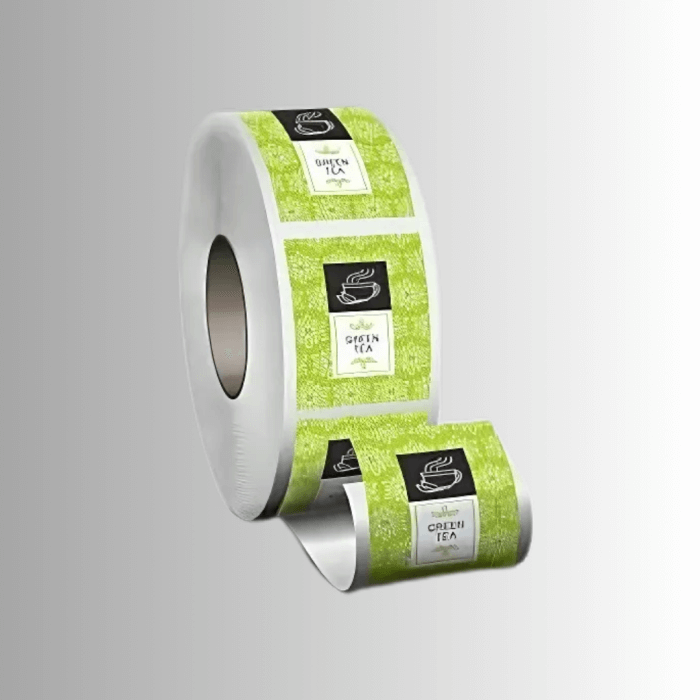
Stickers on a roll exist for one reason: speed of application. If you are putting the same sticker on hundreds or thousands of items, peeling from a roll is several times faster than picking from a sheet, and it is what makes labelling a production run practical rather than tedious.
Rolls suit product labelling, packaging lines, price marking and anything applied repeatedly. Choose your size, material and quantity below to see live pricing.
Labels are supplied on rolls as standard
Select Your Options – Starting from $80
- Stock
- Shape
- Size
- Quantity
- Price
- Delivery

- Custom Shape Fee
- Sub Total
- GST

- Total (incl. GST)
 Checkout
Not seeing what you're after? Click here for custom quote.

Please be patient, your order will be submitted shortly
Why a roll rather than sheets
Application speed is the whole argument. A sticker on a roll presents itself one at a time, already separated, at a consistent position. Sheets require picking, peeling from a flat surface and handling each piece individually.
For a run of twenty, sheets are fine. For a run of five hundred, a roll saves hours. For anything going through a labelling applicator, a roll is the only option — machines feed from a core and cannot use sheets at all.
Rolls also protect the stickers better. A wound roll keeps the adhesive covered and the faces clean, where sheets in a box get handled, bent and dog-eared.
Core size, winding and direction
Three specifications matter when ordering rolls, and they are easy to overlook.
Core diameter is the cardboard tube in the middle. Hand application is flexible about this. Machine application is not — the applicator dictates the core size, and getting it wrong means the roll will not fit.
Roll direction describes which way the sticker faces as it comes off. Again, hand application does not care. Machines do, and it is specified as a standard set of numbered positions.
Stickers per roll determines how often the roll is changed. More per roll means fewer changes but a heavier, larger roll to handle.
If the stickers are being applied by hand, tell us and we will use sensible defaults. If they are going into a machine, we need the applicator’s specification.
Materials for roll stickers
Vinyl for products that will be refrigerated, get wet, go outside, or need to last. Bottles, jars, cosmetics, chemicals, outdoor equipment.
Paper for dry indoor use where cost is the priority — price marking, internal identification, short-life packaging.
Gloss or matte on either. Matte takes handwriting where gloss does not, which matters for labels with a field to be filled in.
A laminate is worth considering for products handled frequently in retail, where the label gets picked up and put down dozens of times before it sells.
Common uses
Product labelling across a range — the most common use by a wide margin, particularly food, drink, cosmetics and small-batch manufacturing.
Packaging and carton marking on despatch lines.
Price and barcode labels applied at volume.
Batch, date and compliance marking where the same sticker goes onto every unit.
Promotional seals applied to bags and boxes at point of packing.
Frequently asked questions
How many stickers come on a roll?
That is yours to choose and it is a practical decision rather than a technical one. More per roll means fewer roll changes but a heavier roll to handle. If you are applying by hand, smaller rolls are easier to work with.
What core size do I need?
For hand application it does not matter and we will use a sensible default. For machine application the applicator specifies it, and using the wrong core means the roll will not fit. Check the machine before ordering.
Can I get rolls for a labelling machine?
Yes. We need the core size and the roll direction the machine requires. Both are in the applicator documentation. Supply those and the roll will run without adjustment.
Are rolls cheaper than sheets?
At volume, generally yes, and the real saving is in application time rather than print cost. For small quantities sheets are often more economical.
What is the smallest quantity you supply on a roll?
Rolls make sense from a few hundred upwards. Below that, sheets are usually the better format and the cheaper one.
Can I have different designs on one roll?
Yes, though it complicates application because you cannot control which comes next. It suits variety packs and mixed product ranges where the sequence does not matter.
Vinyl or paper for product labels?
Vinyl for anything refrigerated, damp, oily or outdoors. Paper for dry indoor products where cost matters most. If the label will meet moisture at any point, vinyl.
Can I write on the labels?
On matte stock, yes — matte takes pen and pencil readily. Gloss stock resists ink and smudges. If the label has a field to be filled in by hand, specify matte.
Do you print barcodes?
Yes. Supply the barcode as vector artwork rather than as an image, and keep it at a size and contrast that scanners read reliably. We will flag anything that looks likely to cause problems.
How should I store rolls?
Somewhere cool, dry and out of direct sunlight, stored on the core rather than resting on the roll edge. Adhesive performance drops if rolls are stored hot for long periods.